
Hegemony refers to the “cultural dominance of one group over others often supported by legitimating norms and ideas.” (Ben). The word is borrowed from the Greek term hēgemonia, which means the role of “authority, rule, political supremacy,” shaping the relationship between city-states (OED). Italian philosopher Antonio Gramsci extended the idea into culture, where he argued that hegemony enables “the concepts and viewpoints that are generally accepted by a large portion of people in a group. . . dominate that culture simply because they are held in common and seem natural to many” (Ungvarsky).
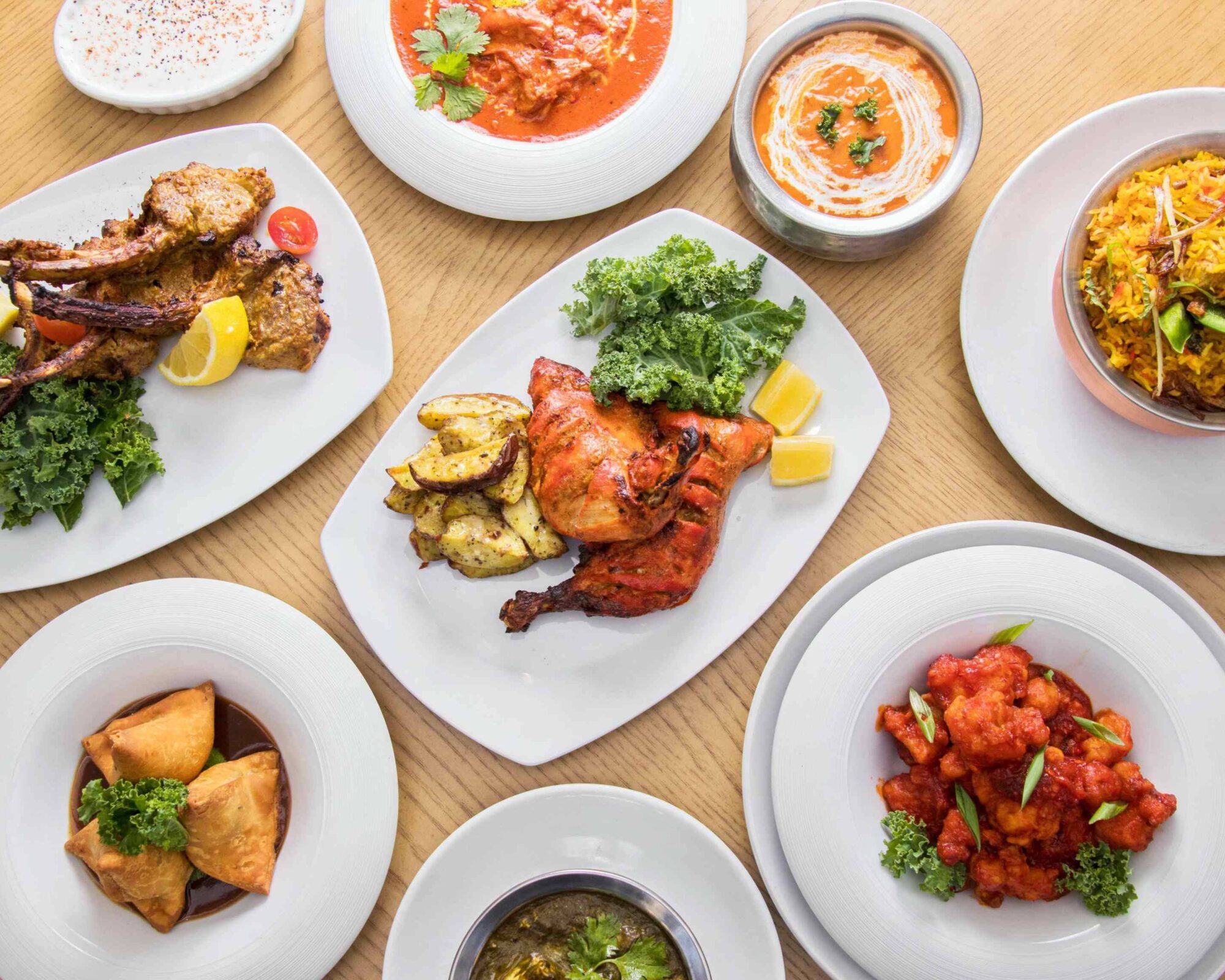
In the context of South Asian food in the United States, Indian cuisine has long overshadowed the culinary traditions of neighboring countries. One of the guiding questions of our lab is: Why is there a hegemony of Indian food among South Asian restaurants? This dominance is not accidental. At the same time, explaining this dominance solely by pointing to the numerical Indians within the South Asian diaspora would be rather simplistic. The reason for this control can be traced to a combination of historical survival strategies adopted by early South Asian immigrants, shared culinary traditions shaped by geographical proximity, and the persistence of a “catch-all” label that caters to Western diners. Together, these forces have made “Indian food” both the most recognizable and the most marketable label for South Asian cuisine in the U.S., including in metro Atlanta.
The demographic majority of the Indian diaspora has shaped the “Indian” label in problematic ways. For many South Asian immigrants arriving in the U.S., economic survival took priority over cultural representation. As Kelly Ng reports in “South Asian eateries in U.S. distinguishing cuisine from ‘Indian food’ Umbrella,” a Bangladeshi restaurant owner noted that many customers “still don’t know where the heck Bangladesh is” (Ng). In such a landscape, adopting the Indian label was not only practical but often essential for gaining visibility in a market where most diners lacked familiarity with South Asian geography. Over time, this strategy normalized the idea that “Indian food” represents the entire region, even when the owners themselves came from Bangladesh, Pakistan, Sri Lanka, Nepal, Bhutan, or Afghanistan. This pattern may explain why there are visibly many more Indian restaurants compared to other South Asian restaurants in the metro Atlanta area, especially older ones. Our own ArcGIS maps show that most restaurants around Atlanta are Indian, which reinforces the dominance. Many Pakistani or Bangladeshi restaurants include a wide array of quintessentially Indian dishes such as vindaloo, tikka masala, or butter chicken in their menus.
Geographic proximity and culinary cultural similarity can also help explain this dynamic. Neighboring countries, particularly India, Pakistan, and Bangladesh, share many well-known dishes such as biryani, pulao, kebabs, gravy dishes, karahi, korma, and various breads. Spices and ingredients like garam masala, saffron, pickles (achaars), basmati rice, etc., are grown, manufactured, and commonly used in the food of these countries. This makes it easier and more profitable for Pakistani and Bangladeshi restaurants to brand themselves as Indian or Indian-Pakistani or Indian-Bangladeshi. This logic does not hold for countries like Nepal, Bhutan, or Sri Lanka, whose distinct culinary traditions bear little resemblance to mainstream North Indian cuisine due to geographical differences. Yet, one can find several popular Indian dishes on their menu. Kathmandu Kitchen, located in Clarkston Village Shopping Center, makes a good profit by selling rogan josh and tikka kebab. Similarly, International Kabab House, an Afghan restaurant housed in the Spring Mill Village Shopping Center, serves chicken biryani without any qualms. Interestingly, one may find a tikka masala tasting a bit different in a non–Indian restaurant due to inevitable adaptations.
It is important to note that while the “Indian” label offers economic advantages, it can also limit the visibility of other South Asian cuisines. The broad umbrella term collapses the region’s diversity into a single category, making it harder for Nepali, Bangladeshi, Sri Lankan, or Afghan restaurants to succeed outside of their own tight-knit communities. Some owners have started pushing back against this dynamic. For instance, restaurants like Korai Kitchen in New Jersey have adopted tags like #NoChickenTikkaMasala to emphasize their difference from mainstream “Indian” cuisine and assert their Bangladeshi identity (Ng). This phenomenon is very much evident in Atlanta. Many Pakistani and Bangladeshi restaurants that have been established in the last fifteen years are proudly promoting their native cultural food and making handsome profits. Our ArcGIS maps with embedded restaurant menus attest to this fact.
From my perspective, Indian food is undeniably delicious, and its popularity is well-earned. However, other communities also deserve the opportunity to showcase their culinary identities and be appreciated for their unique traditions. Building outreach through more significant promotions is key. Simultaneously, the non-South Asian American customers need to move out of their India cuisine–structured comfort zones and become more adventurous. As more diners seek authentic experiences and become aware of regional distinctions, there is potential for a more inclusive and accurate representation of South Asian food in places like Atlanta. Recognizing the history behind India’s hegemony is a crucial first step toward making space for the full spectrum of South Asian cuisines to shine.
References
“Hegemony, N., Etymology.” Oxford English Dictionary, Oxford UP, December 2025, https://doi.org/10.1093/OED/9593850911.
Ng, Kelly. “South Asian Eateries in U.S. Distinguishing Cuisine from ‘Indian Food’ Umbrella.” NBC News, 17 Feb. 2020, www.nbcnews.com/news/asian-america/south-asian-eateries-u-s-distinguishing-selves-indian-food-umbrella-n1137071
Ungvarsky, Janine. “Hegemony.” EBSCO Research Starters: Social Sciences and Humanities, 2024, www.ebsco.com/research-starters/social-sciences-and-humanities/hegemony#full-article
Rida Pothiawala is an undergraduate student at Georgia State University. She worked at the ATL Gastro Carta team in Fall 2025.
